

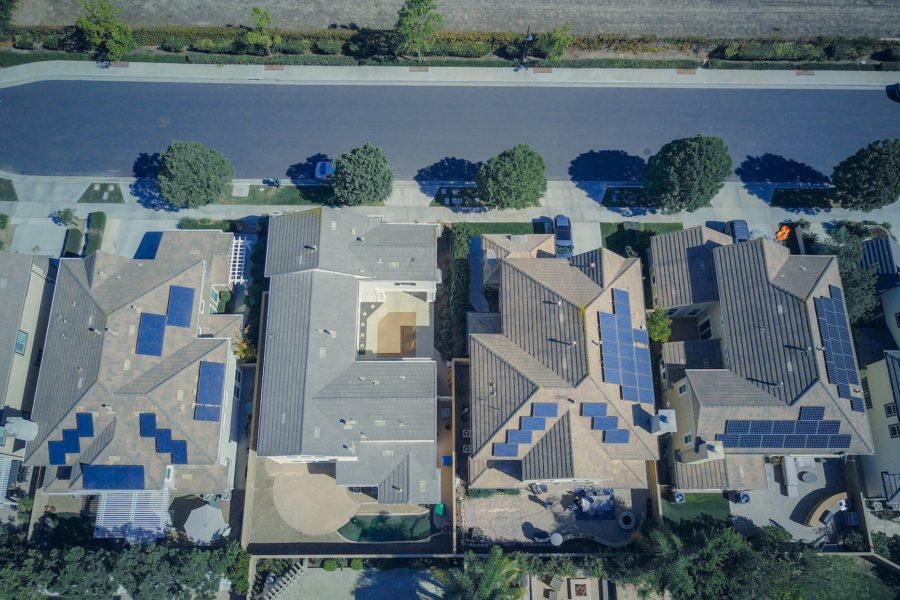
If you’ve been asking questions about how home solar pays off, this article provides your answer and more. The first response is this: Solar increases home value. And, solar systems appreciate in value, all at the same time. On top of that, home solar provides other remarkable financial benefits explained here.
Since home solar increases home value and it provides many more benefits, let’s take a look at those in detail. The guidance you gain here will equip you to make the best decisions. Therefore, read on to uncover how home solar will increase your home value and how it pays off.
Home solar increases home value
According to several reliable sources, there is solid evidence that home solar assets increase home value shown by both home appraisals and home resale closing prices that were studied. Let’s start with a few sources so you can read and confirm these findings for yourself. Two of the following articles require a simple signup to read the entire article. These are the links:

In the first article, which is an academic work, it states that the research analyzes a large dataset of California homes that sold from 2000 through mid-2009 with solar installed. The analysis finds strong evidence that homes with solar systems sold for a premium over comparable homes without. Great news!
The second article reveals a prospective model developed to determine the value of solar. That can be directly translated into how solar increases home value for resale. They use an income capitalization approach that considers the present value to determine the future value of a solar system.
Finally, the third article how a solar system adds value to your assets – your home. Read it to see their research from several building owners and managers. It reveals how they made the business case for solar and found increased asset values during appraisal or at the time of sale – resale.
Short video reveals how solar increases home value
In the following short video, Eric Martineau, the founder and owner of Just Get Solar reveals detailed insight about how solar increases home value. There, uncover exactly how important it is to own your own solar system from actual data presented by Eric. Check it out!
As you can see, the benefits of purchasing your own solar system abound. Be sure to contact Just Get Solar to get a free quote.
Financial benefits that go well beyond how solar increases home value
To begin, the financial benefits that you gain from solar offsets upfront costs. First, receive tax credits from the US Government. Right now, that credit is 26% of your total solar assets and installation cost. Unfortunately, that reduces to 22% in 2023 and the future of it is unknown after 2023.
Since the value of your home will increase after installing your own solar system, you’ll be able to sell your home faster. On top of getting considerably more for your home since your home appraisal will increase, your solar assets provide a great hedge against inflation, just like home ownership already does.
Finally, get higher monthly rent when leasing your home. This not only comes from your increased home value, but the greatly reduced or eliminated electric bill provides an attractive justification for increased rent. Then, when you add the environmental factor of solar power, your potential renter pool increases.
Save additional money with a solar system
As you know, sunlight is free. And, that energy produced from sunlight is nearly endless. That being said, installing an effective and sufficient home solar system costs money. But, the money-saving benefits always come through in the end. As such, solar is an investment that really pays off.
Save additional money by using a solar system broker like Just Get Solar. As an equipment broker, Just Get Solar eliminates the middle man, saving you those large commissions of 25% to 35%. On top of that, they get you the best equipment at the best prices and the best loan rates, saving you even more.
When financing your solar system, loan payments remain constant throughout the term of your loan. When you compare that to those regular increases on your monthly electricity bills, those prices increase regularly. And when your load term is over, those monthly payments disappear.
Moving in three years? Get free electricity
In the video presented above, at minute 2:44, Eric explains how you can receive free electricity for three years by showing the math. First, he breaks down the general yearly cost of electricity for the next three years. Then, he compares total solar system cost, after tax credit, to that saved. He makes a great case!
Solar can provide electrical autonomy
Since the peace of mind that comes from electrical independence and unbroken electrical assurance is undeniable, let’s look deeper. To begin, electrical autonomy normally comes from off-grid solar systems. But if your home is connected to the power grid, a hybrid solar system is your best option.
The center of both a hybrid solar system and an off-grid solar system is a multi-mode inverter. First, this converts DC or direct current from your solar panel array and battery bank to 120V AC or Alternating Current to your house. Then, it charges and manages your battery bank to prolong battery life.
Check out this informative article to learn exactly how to calculate what must go into your solar system:
OFF-GRID SOLAR CALCULATOR: How to calculate an off-grid solar system size
Off-grid home solar systems explained
Starting with off-grid solar systems, over 300,000 homes use them for their energy needs around the world. They know that when connected to the grid, they’re dependent on an external supplier, the utility company, for all their power. And when that power grid goes down, so does their power supply.
There’s a balance between your off-grid solar system size and your electrical needs. In order to provide true unbroken electrical assurance, your battery bank must be quite large to get you through long periods of little to no sunlight. Also, a backup generator may be needed depending on your region.
Brief explanation of hybrid solar systems
When referring hybrid solar assets, you’re talking about a self-sustaining household electrical system that is also connected to your local electrical grid. That means, this system provides three sources of electricity: solar power, battery bank power, and power from your local electrical grid.
Keeping your connection to your power grid allows you to receive unlimited electricity. That means, if you use big equipment or appliances, your electrical system will support it without fault. And if the summer heat steeply rises, use air conditioning to your heart’s content and stay cool throughout the day.
Install your custom solar system
I’ll start by saying never attempt to install your own solar system unless properly trained, experienced, and correctly certified to do so. In other words, this type of installation is not a DIY project. To explain, solar component installation and wiring requires an electrician and a construction contractor to do it right.
For a comparison, installing a complete solar system is like installing a circuit breaker unit along with other major electrical systems. One primary component of a solar system is the solar power inverter, which powers your entire home. That means, safety and reliability is no different between the two.
Construction skills are also necessary to install a solar system. To elaborate, solar panel arrays are typically secured on top of existing structures. As such, the physical connections must be strong and reliable. Sometimes, structures are built from the ground up to carry the load of your solar panel arrays sufficiently.